Marked Before the Hunt
Cypress Cedar, Red Cedar, Stone Base
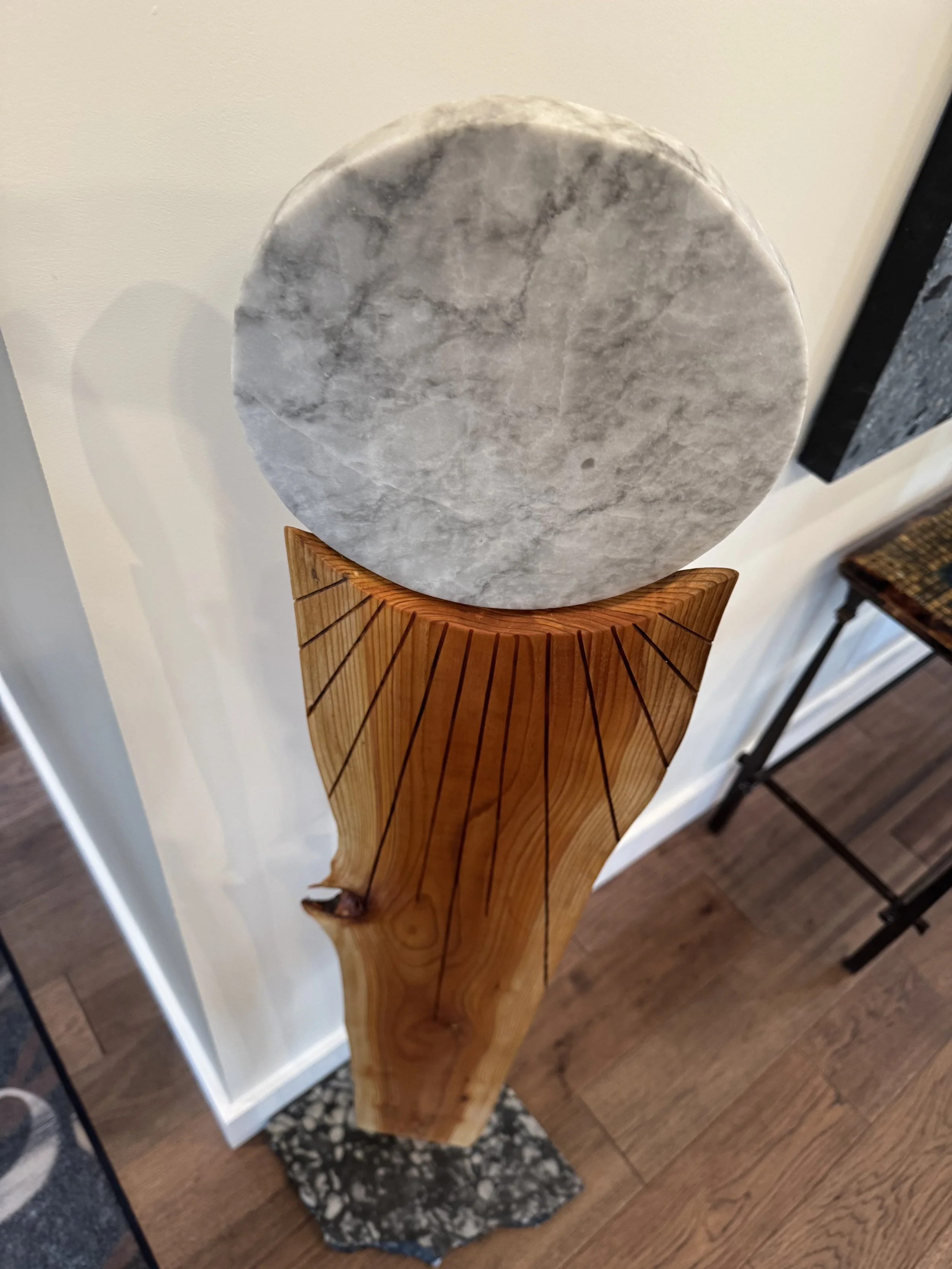
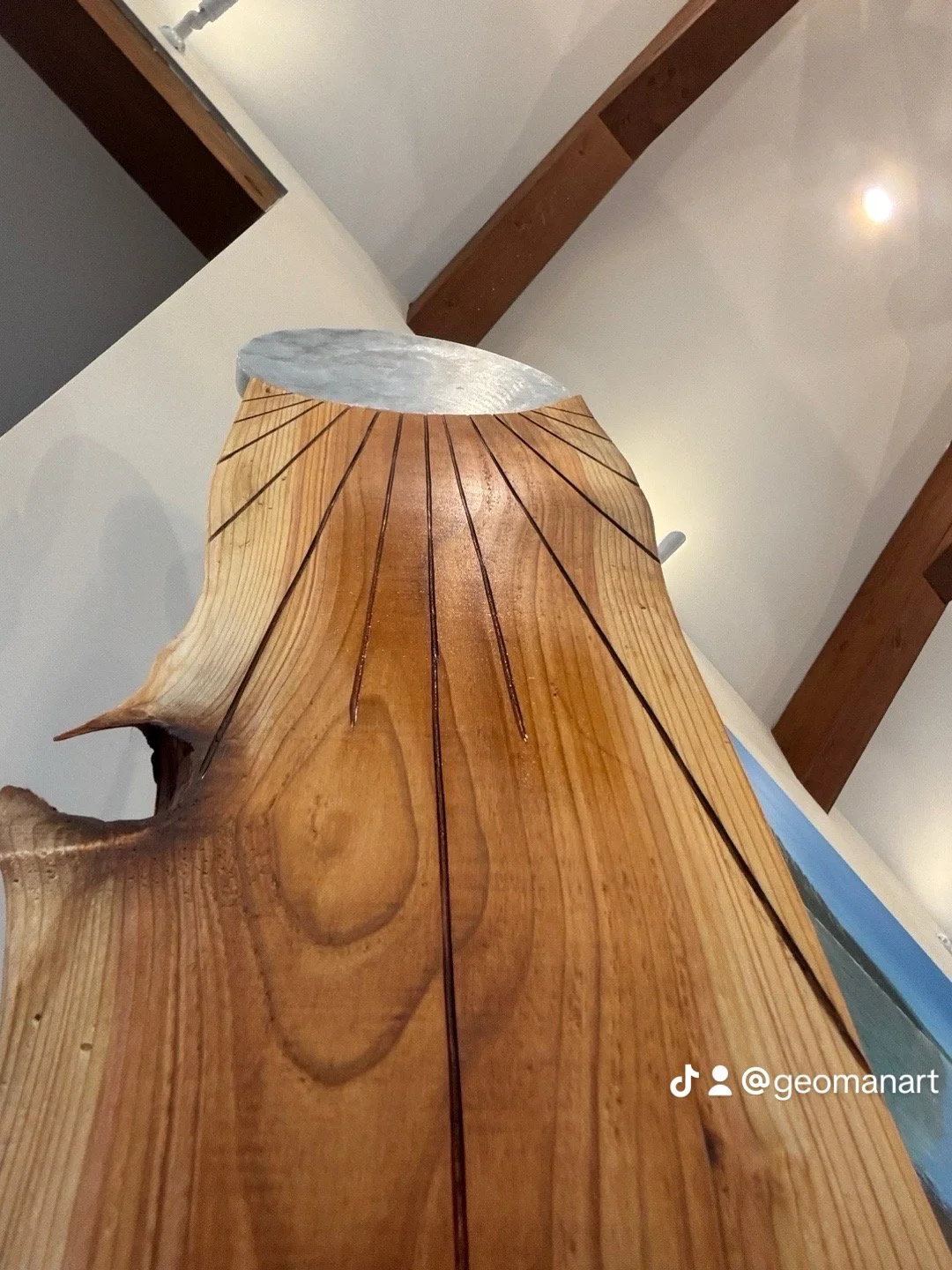
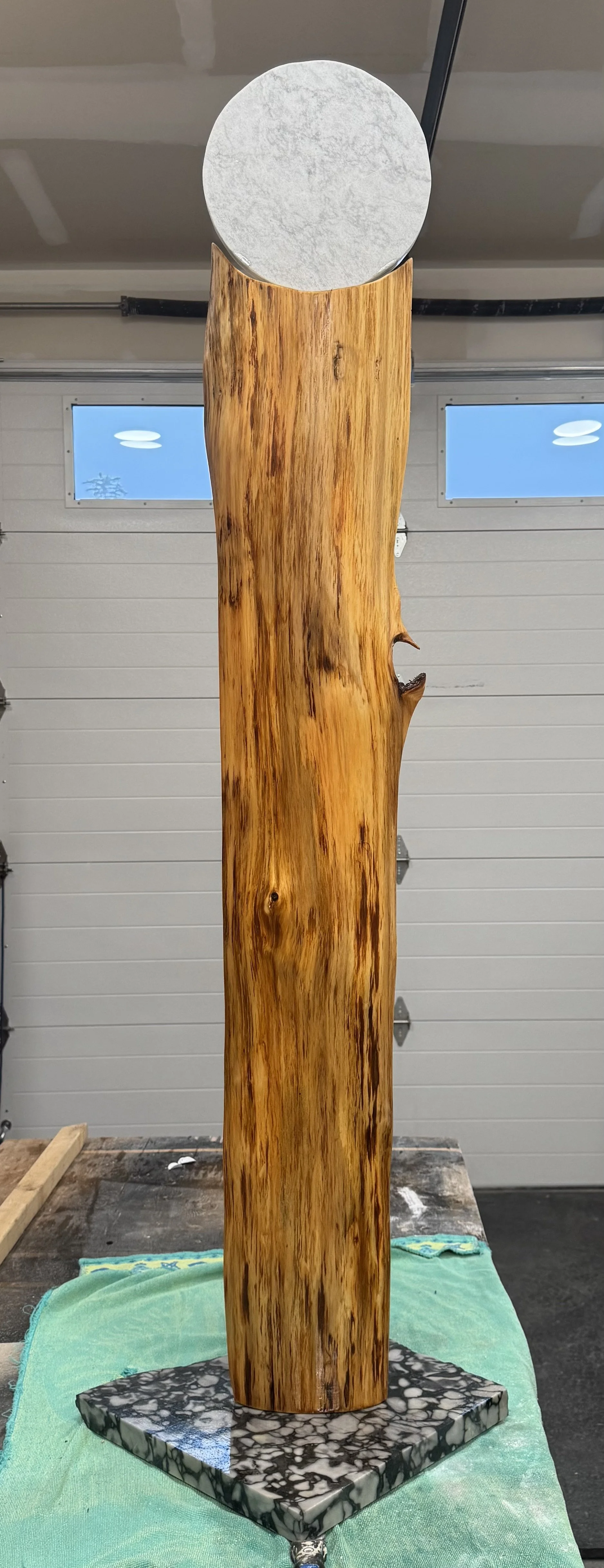
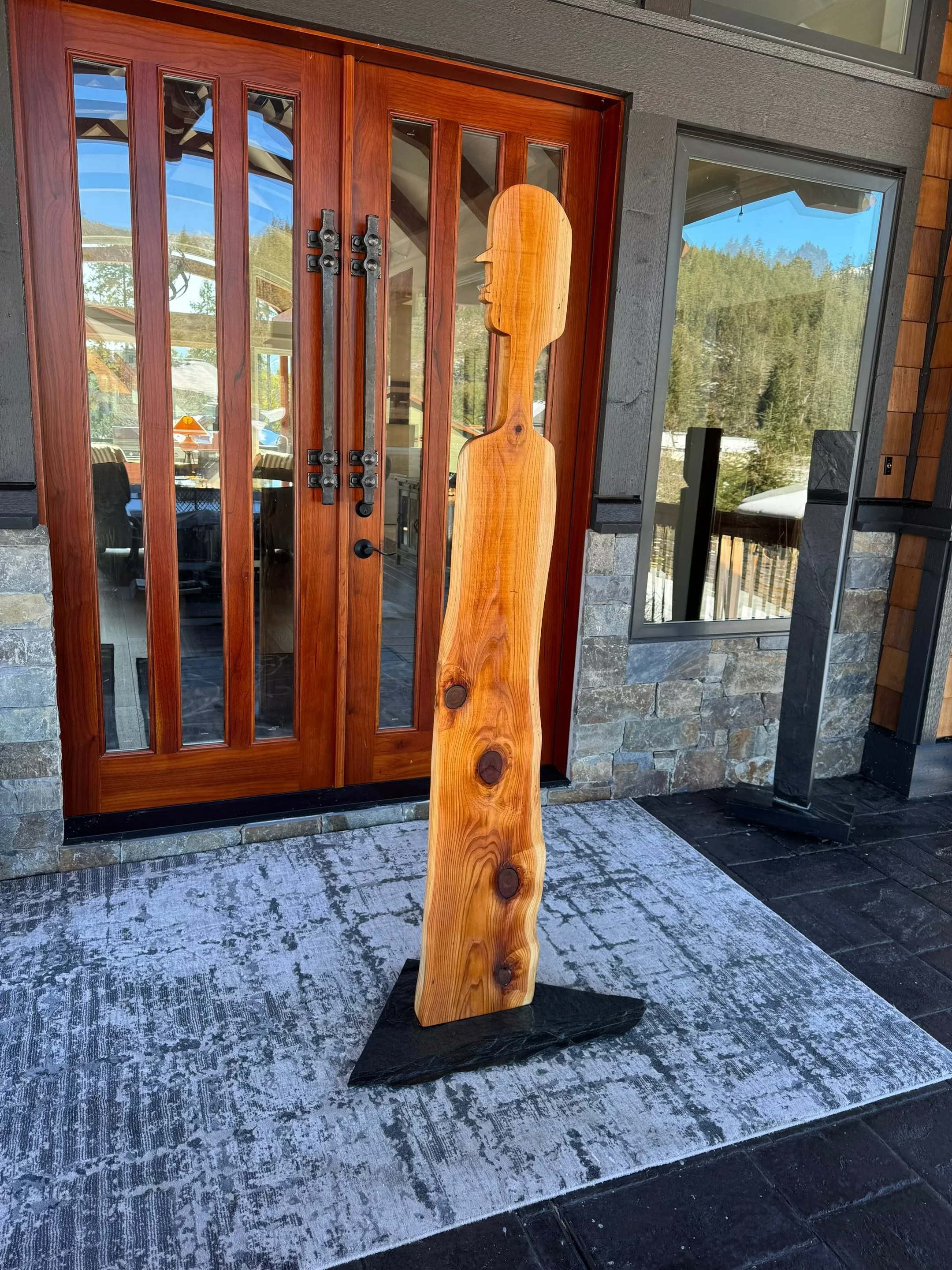
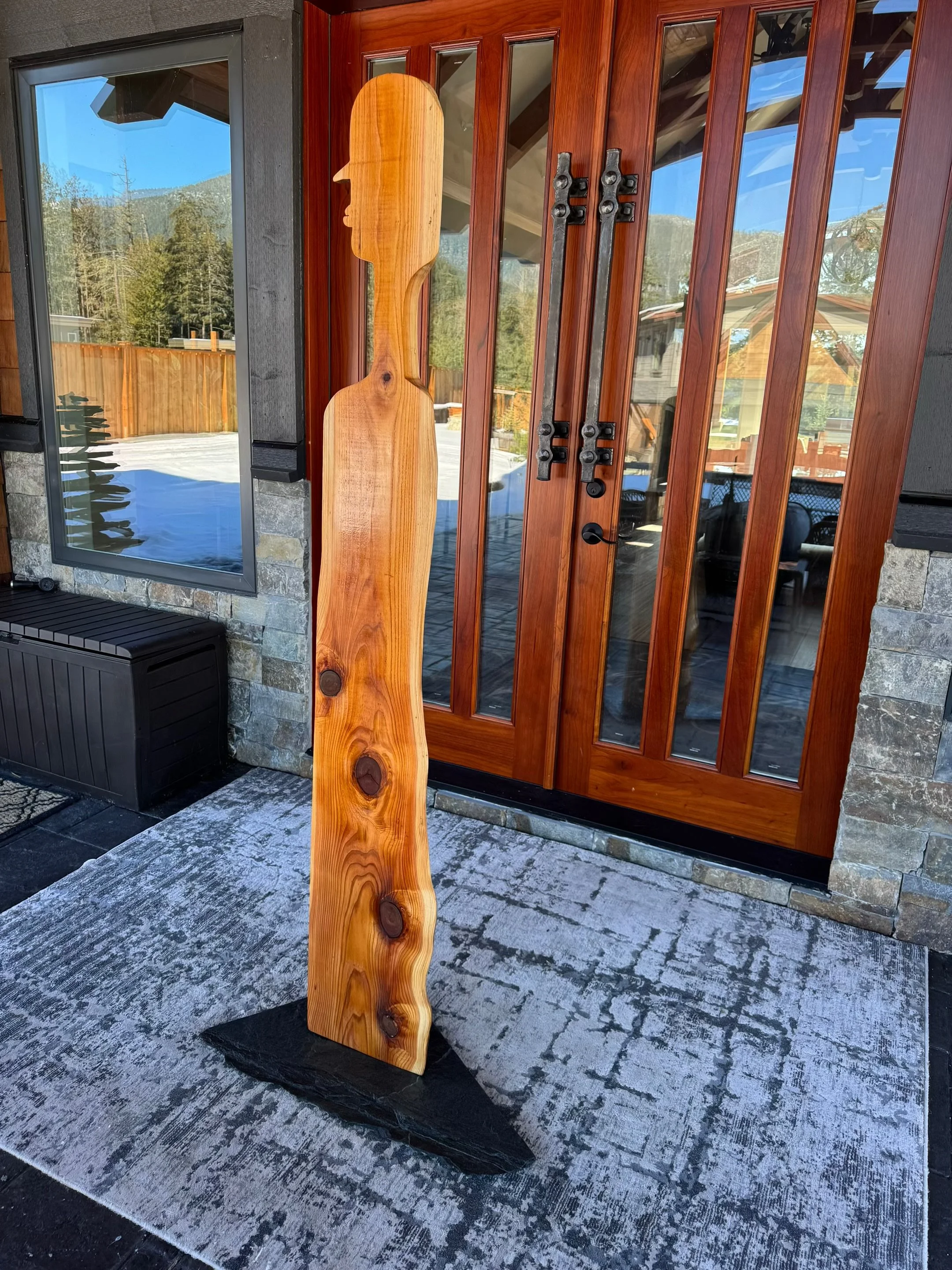
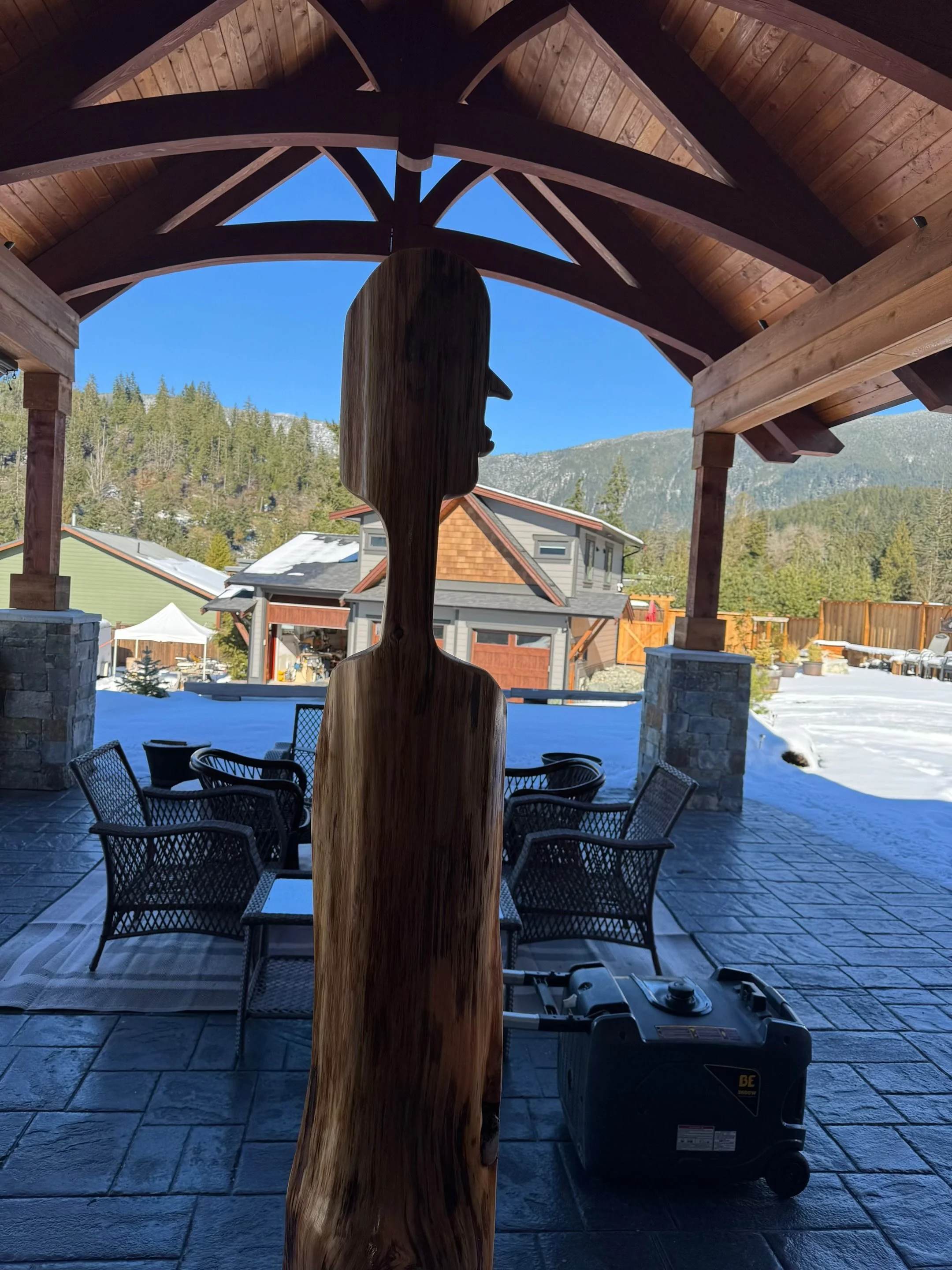
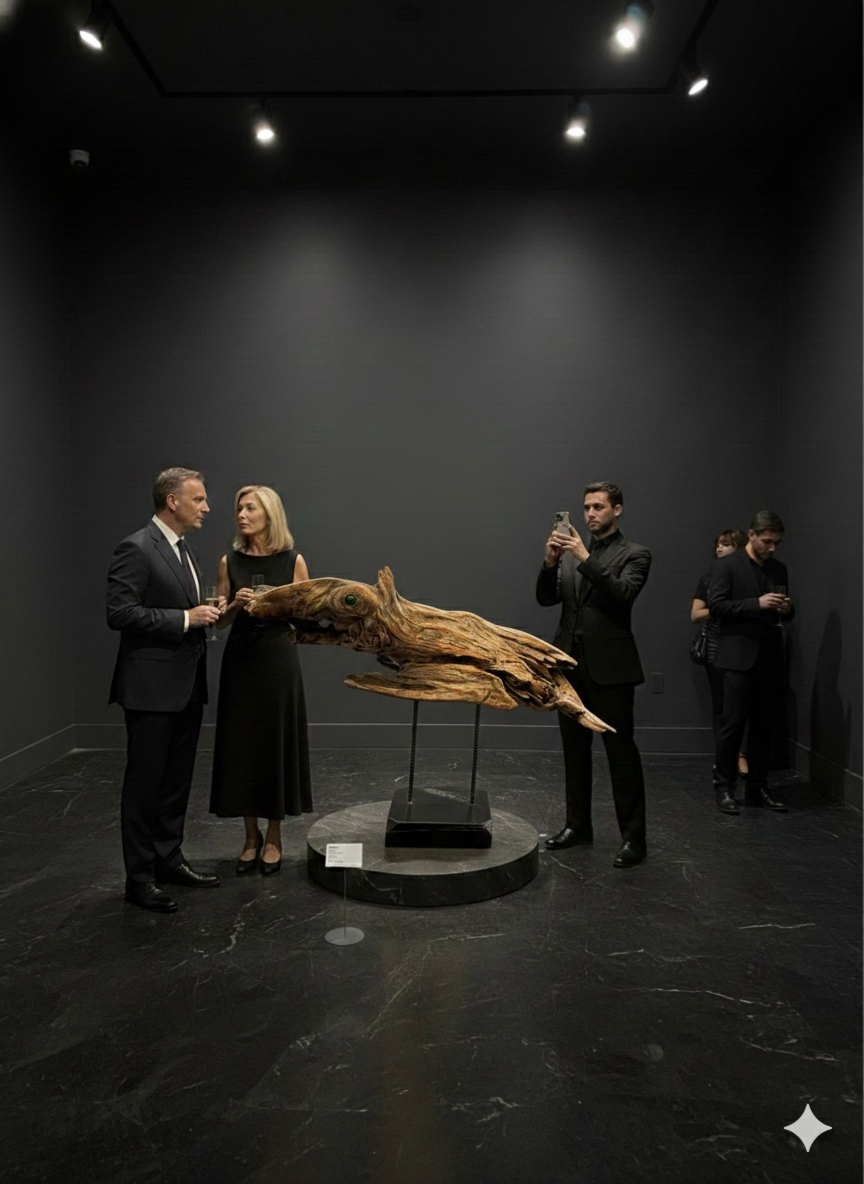
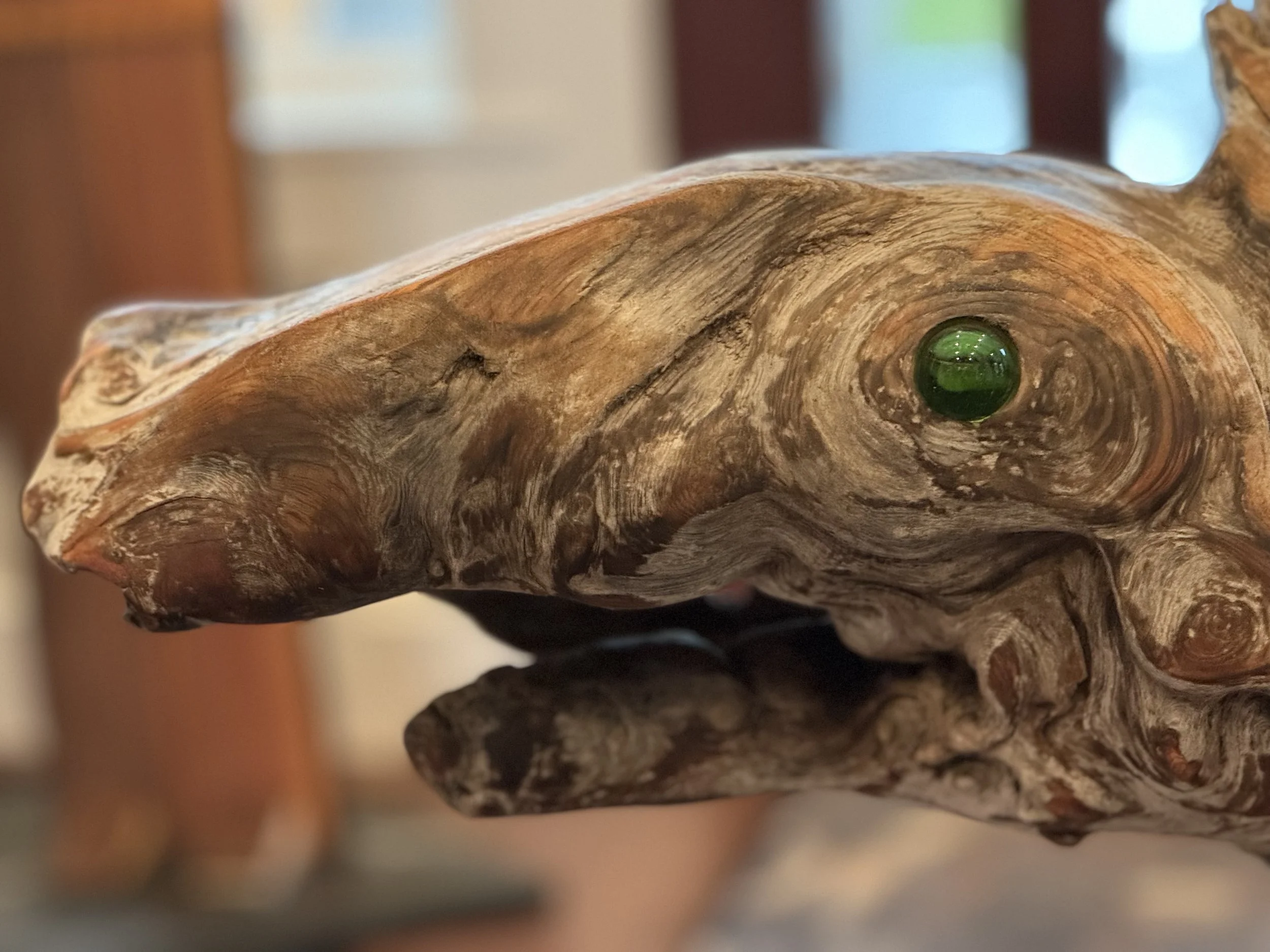
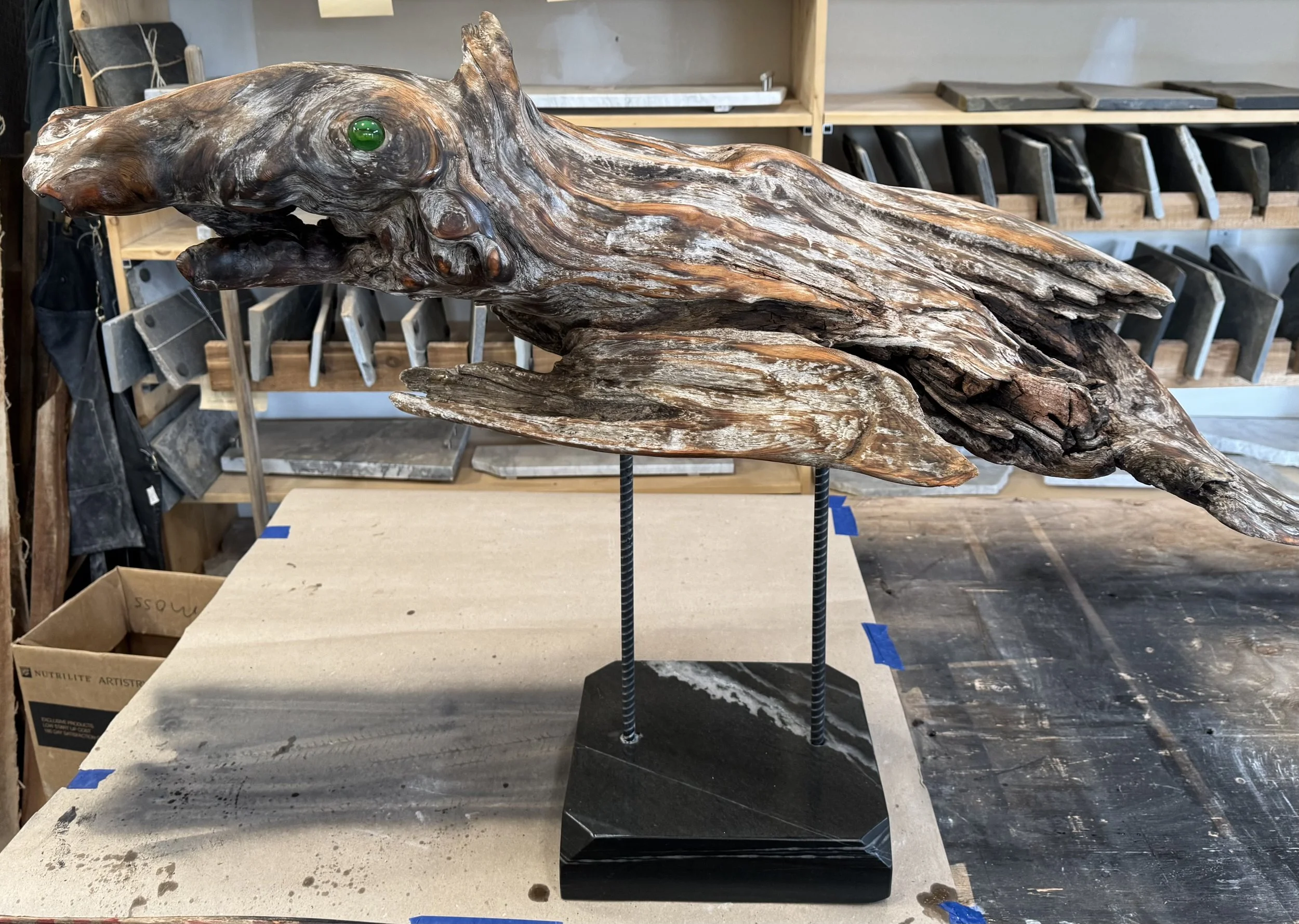
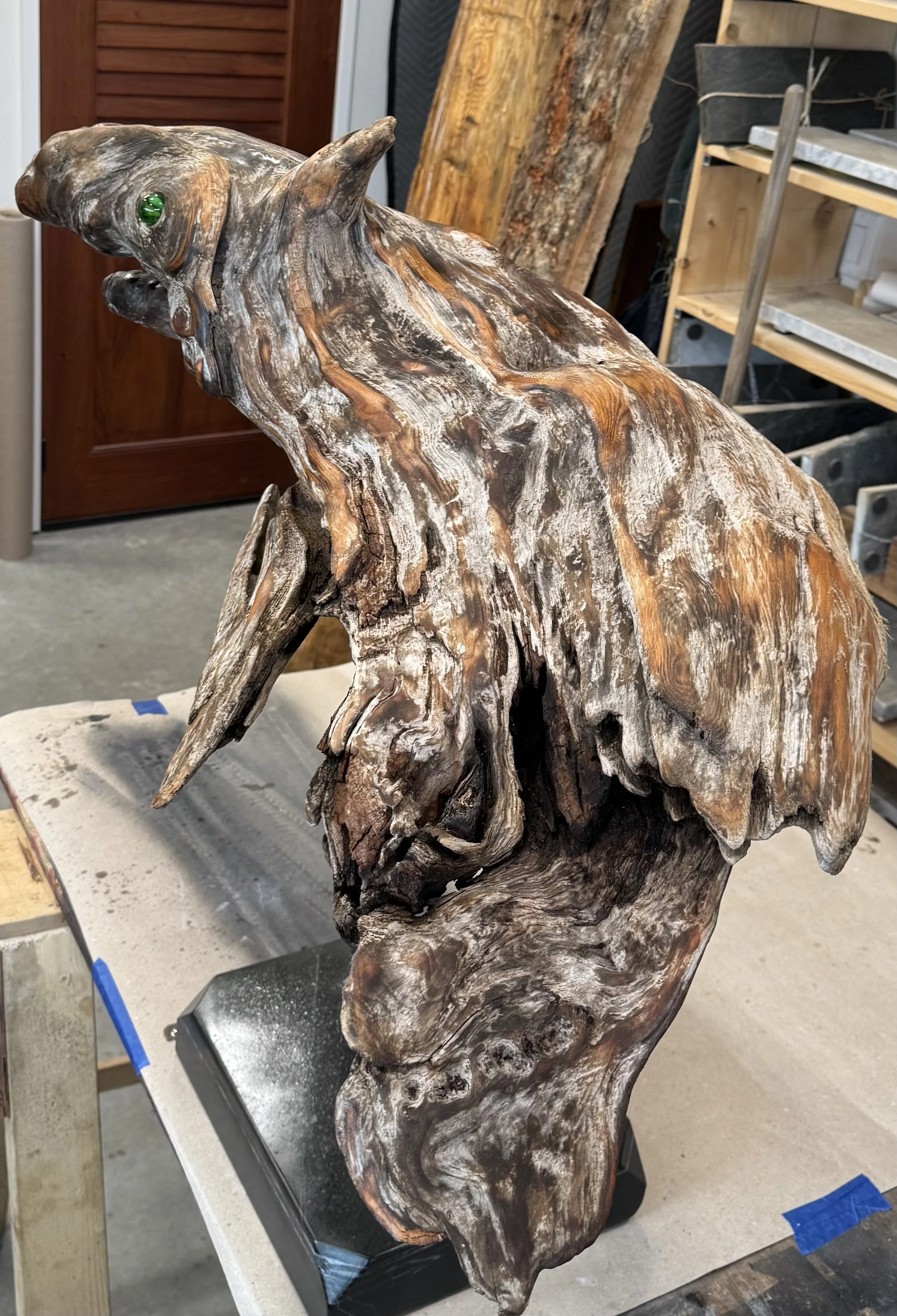
Marked Before the Hunt is a hand-carved sculptural figure exploring ritual, readiness, and the quiet authority of the warrior before action. Carved from Cypress cedar and mounted on a natural stone base, the figure stands upright and grounded, its form intentionally simplified to emphasize presence over narrative.
Burned impressions along the jawline, torso, and lower body reference universal ritual markings found across many Indigenous cultures, without attributing the work to any single tradition. These marks suggest passage, endurance, and identity earned through experience rather than ornamentation. The vertically angled lines along the lower body evoke a grass or fiber garment, symbolizing functional dress worn for purpose rather than display.
A hand-carved red cedar spear is bound diagonally across the figure, introducing contrast in color, movement, and intent. The spear represents readiness and protection, not aggression, reinforcing the moment before action rather than the act itself. A natural mineral oil finish enhances the grain and texture of the wood while preserving its raw, honest character.
This piece is not a replica of any one culture, but a contemporary reflection on shared human rituals, ancestral memory, and the relationship between material, land, and spirit.
Marked Before the Hunt invites quiet observation, honoring restraint, balance, and the enduring language of form and mark.
Marked Before the Hunt
Cypress Cedar, Red Cedar, Stone Base
Marked Before the Hunt is a hand-carved sculptural figure exploring ritual, readiness, and the quiet authority of the warrior before action. Carved from Cypress cedar and mounted on a natural stone base, the figure stands upright and grounded, its form intentionally simplified to emphasize presence over narrative.
Burned impressions along the jawline, torso, and lower body reference universal ritual markings found across many Indigenous cultures, without attributing the work to any single tradition. These marks suggest passage, endurance, and identity earned through experience rather than ornamentation. The vertically angled lines along the lower body evoke a grass or fiber garment, symbolizing functional dress worn for purpose rather than display.
A hand-carved red cedar spear is bound diagonally across the figure, introducing contrast in color, movement, and intent. The spear represents readiness and protection, not aggression, reinforcing the moment before action rather than the act itself. A natural mineral oil finish enhances the grain and texture of the wood while preserving its raw, honest character.
This piece is not a replica of any one culture, but a contemporary reflection on shared human rituals, ancestral memory, and the relationship between material, land, and spirit.
Marked Before the Hunt invites quiet observation, honoring restraint, balance, and the enduring language of form and mark.
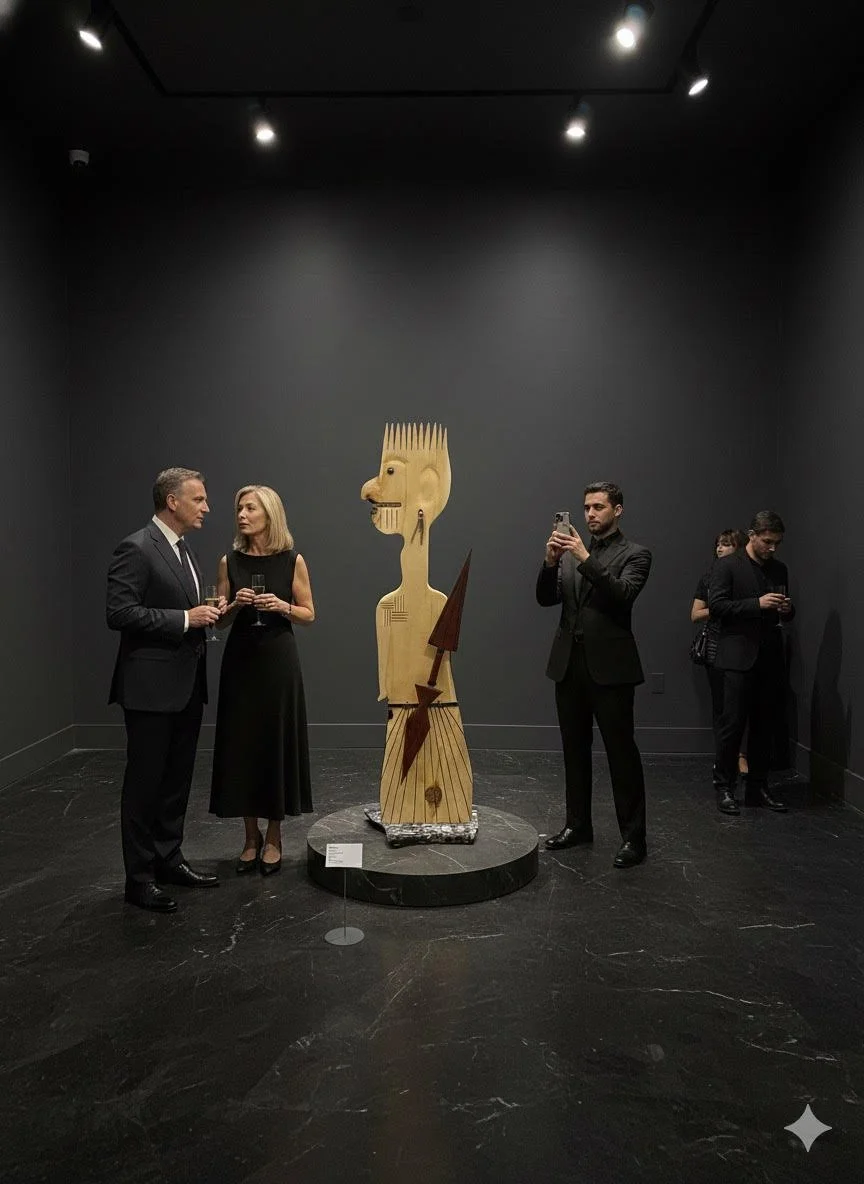 Image 1 of 4
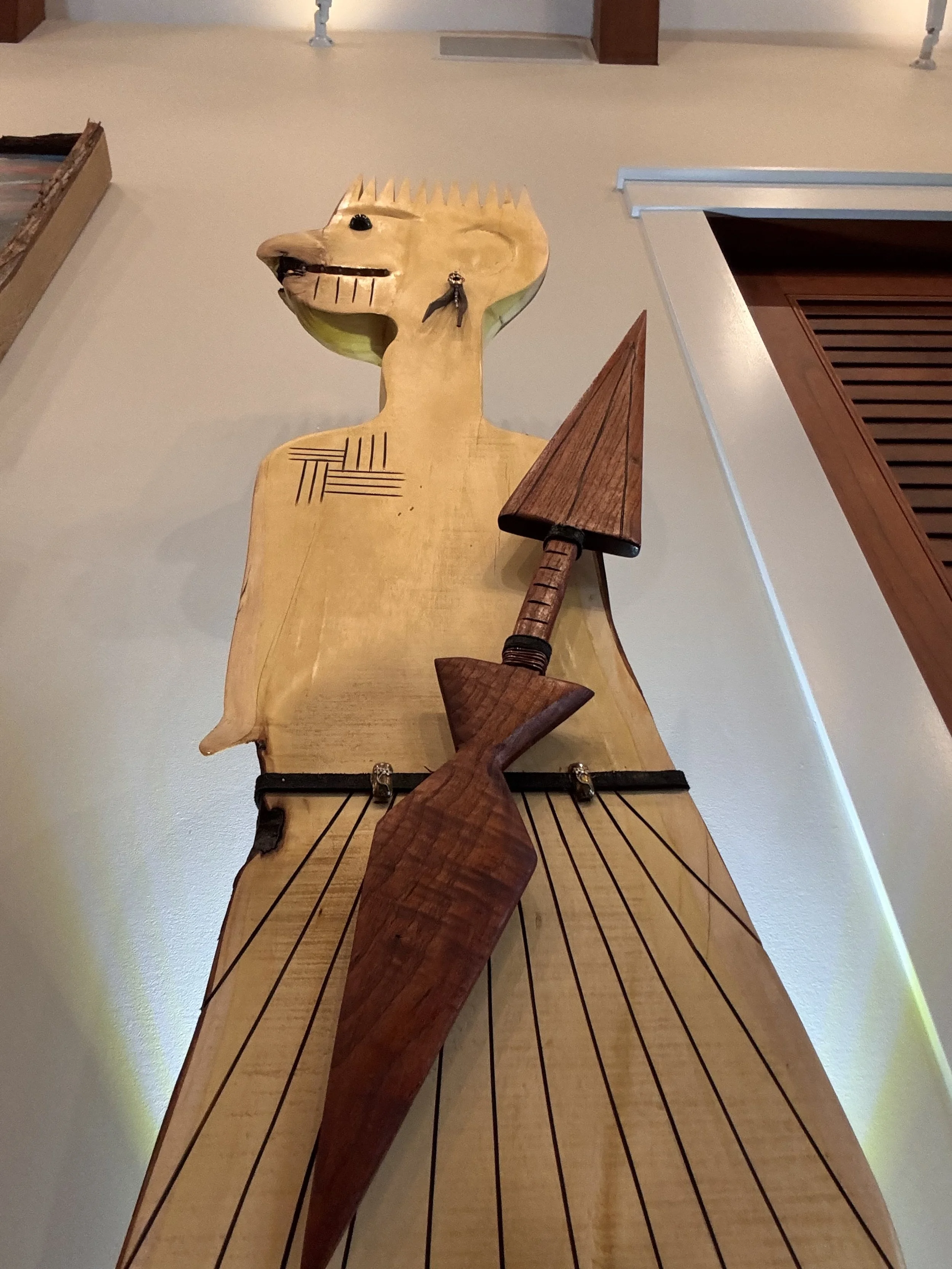 Image 2 of 4
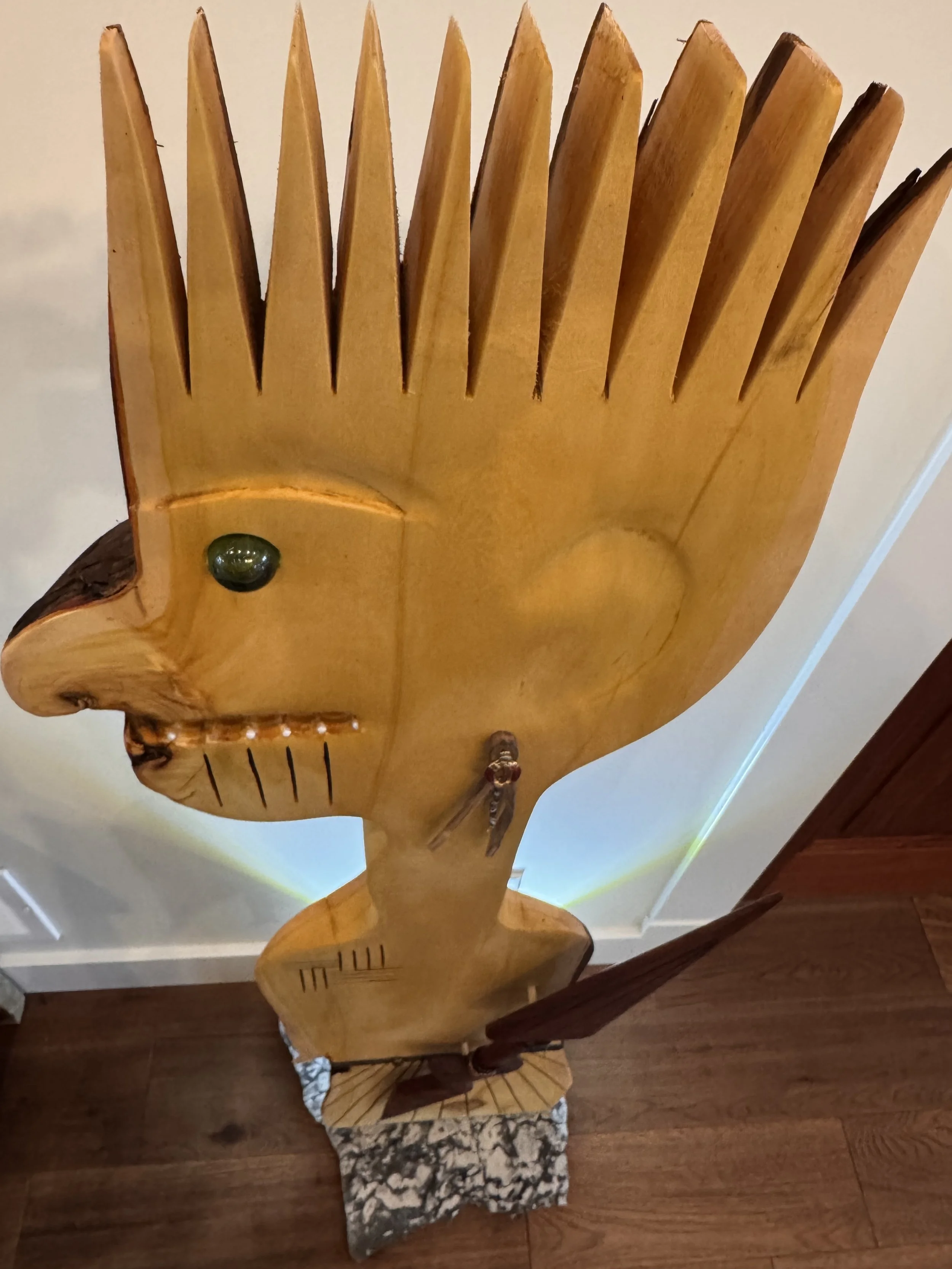 Image 3 of 4
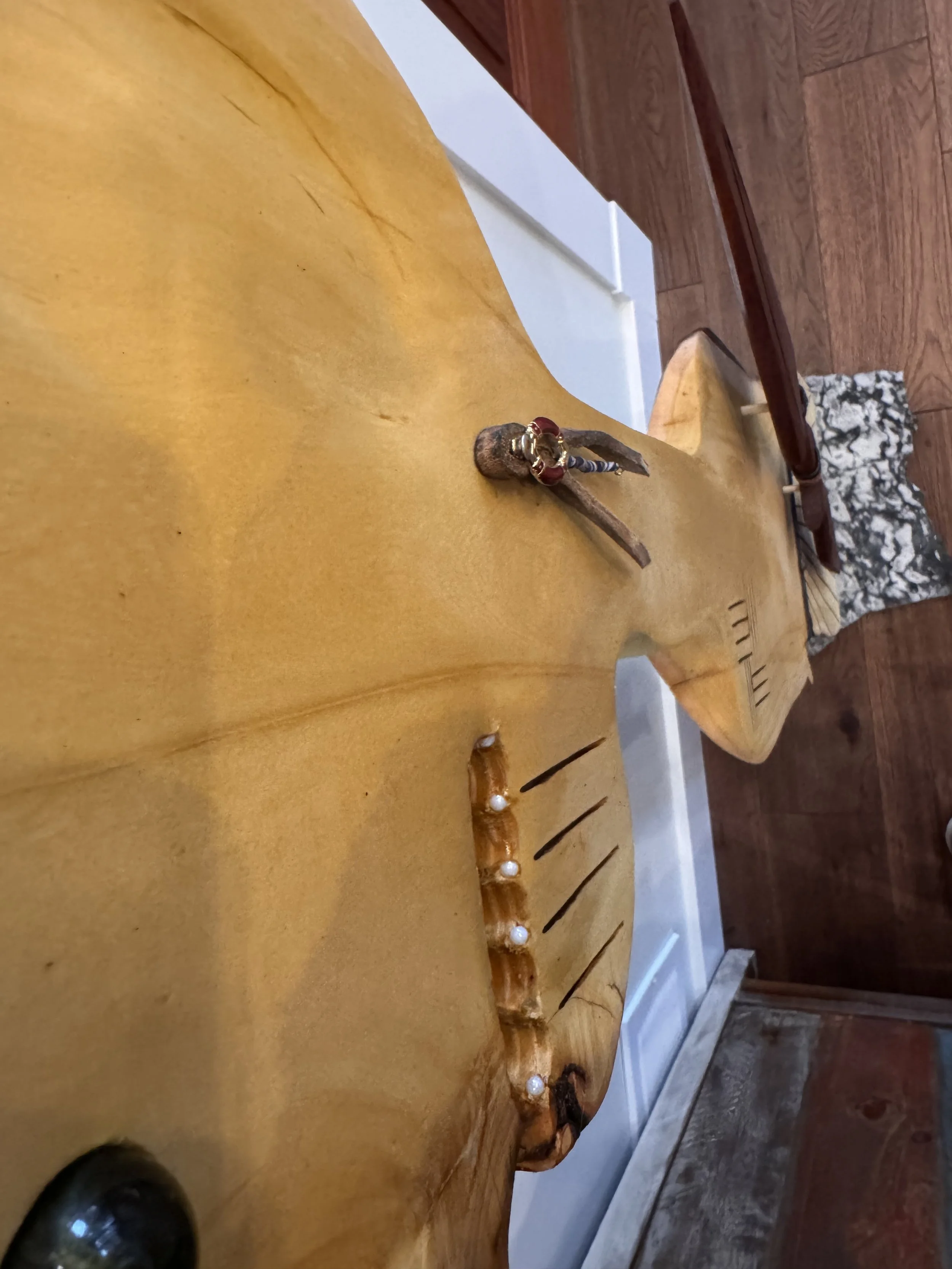 Image 4 of 4